
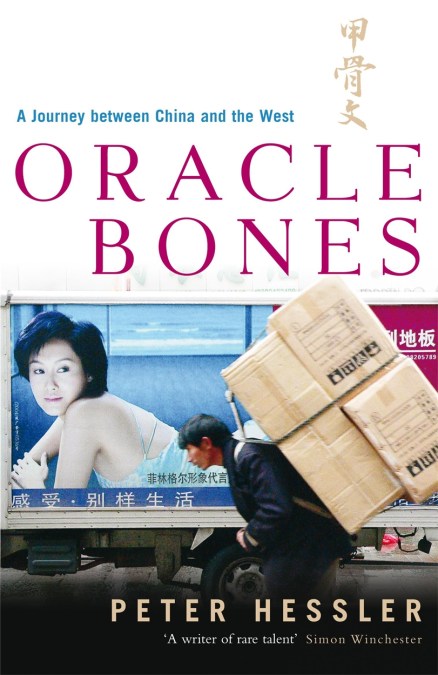
Peter Hessler’s previous book River Town was a prize-winning, poignant and deeply compelling portrait of China. Now, in Oracle Bones, Hessler returns to the country, excavating its long history and immersing himself in the lives of young Chinese as they migrate from the traditional Chinese countryside to the booming ever-changing cities and try to cope with their society’s modern transformation.
Reviews
To come across a Westerner patient enough and tolerant enough to try and understand the immense, exasperating and ultimately lovable entity that is China is always a pleasure. To encounter one that is as literate and sensitive as Peter Hessler is a joy
'One of the most profoundly original books about China'
'A swirl of interconnecting stories and histories make up Peter Hessler's extraordinary, genre-defying second book'
'Oracle Bones, the much anticipated follow-up to his acclaimed debut, River Town, lays bare a rapidly evolving China through his often bizarre encounters with the engines of its social changes.'
'Extensive travel around China with occasional flits back home to the U.S., combine with some fascinating speculation on the origins of Chinese civilisation and how the remote past impinges on the present'
'Dip into it ... You will be hooked'
'A brilliant tapestry of ancient and modern China'
'He ranges widely and, in doing so, illustrates how Chinese history accumulates'
'Valuable for its necklace of vignettes - poignant, comic, and weird '
'[An] extraordinary survey of contemporary China...really quite unforgettable'
'If you read one book on Chinese modern culture, read this one'
'Ingenious ... Stretches back in time as well as criss-crossing present-day China'
'Anyone who wants to begin to understand the complexities that are China, and their bitter-sweet and pregnant relationships with the West, should read this idiosyncratic, brilliant book'
'An impressive and moving account of the lives of ordinary people'